

Increased tossing and turning prevents deep, restorative sleep stages, reducing overall sleep quality and recovery.
(Official Website Only!) Hurry Up – Limited Time Offer – Buy Now
Introducing the Butterfly Contour
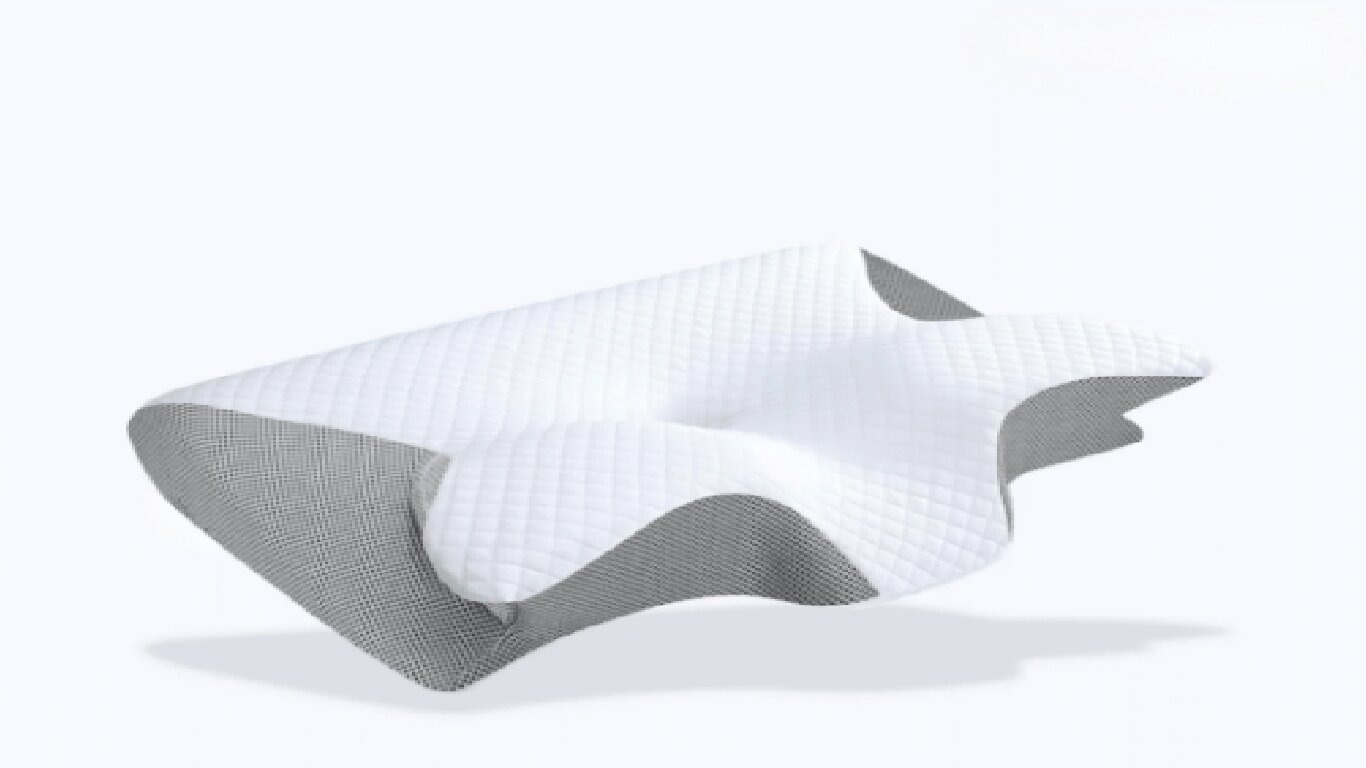
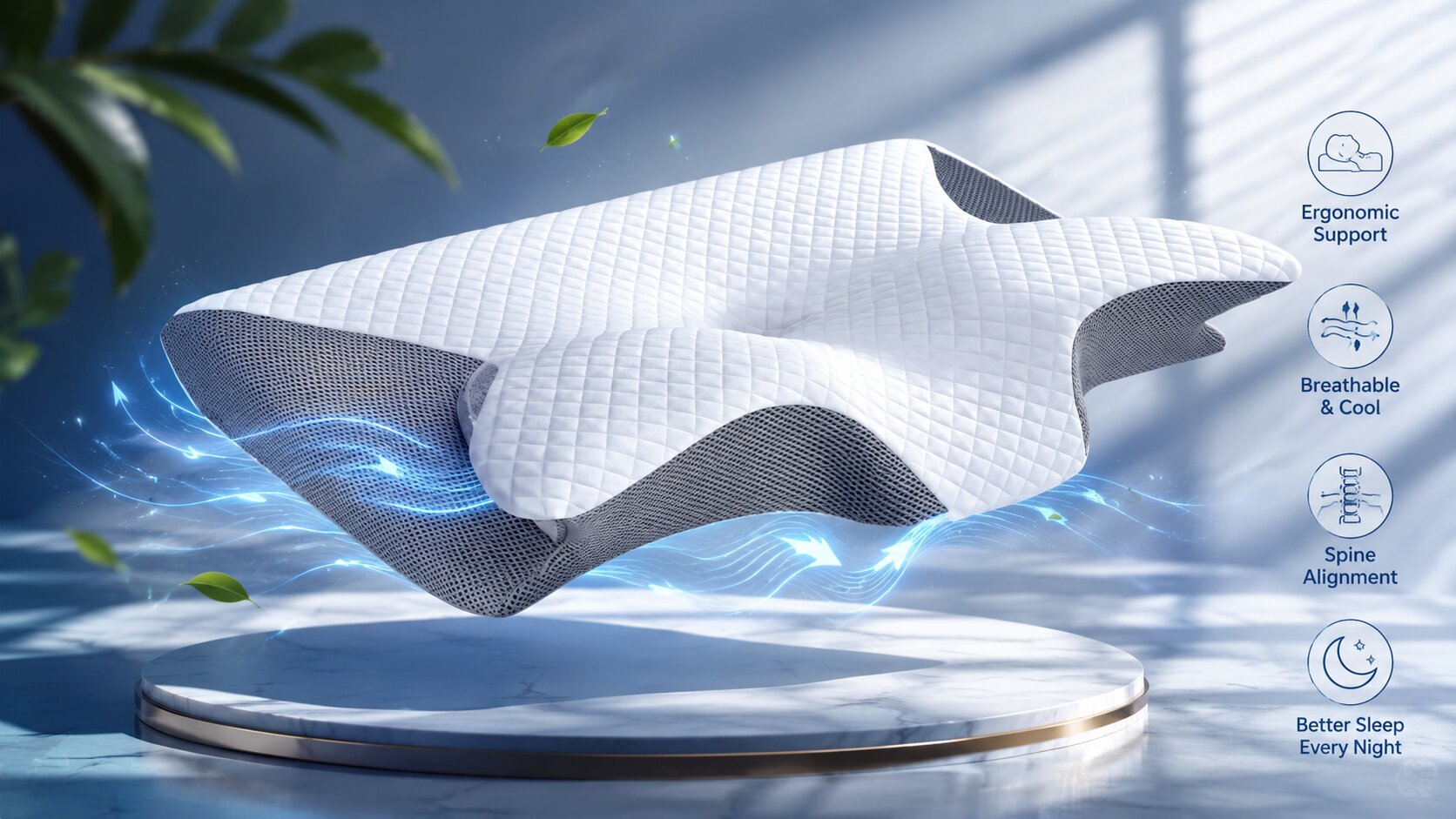
The Melara Max Pillow begins with a fundamental departure from convention: its shape. Rather than the ubiquitous rectangle that has dominated pillow design for generations, the Melara Max adopts a distinctive butterfly or wing-shaped contour. This is not an aesthetic choice made for visual appeal — it is a deliberate ergonomic decision rooted in the anatomy of the head, neck, and shoulders. The butterfly contour is engineered to interact with the human body in a fundamentally different way than a flat rectangular surface ever could.
At the center of the butterfly design is a recessed cradle — a gently depressed zone that naturally accommodates the curvature of the back of the head. This cradle serves a critical function: it stabilizes the head in a neutral position, reducing the tendency to roll or shift during sleep. By creating a defined resting zone, the pillow eliminates the lateral movement that often leads to neck strain and disrupted sleep. The head settles into the cradle and remains supported throughout the night, regardless of minor position adjustments.
Extending outward from the central cradle are the characteristic “wings” of the butterfly profile. These wing sections are specifically contoured to support the neck and shoulders simultaneously, creating a continuous surface of support that follows the natural lines of the upper body. For side sleepers, the wings fill the space between the shoulder and the head, maintaining alignment across the entire cervical spine. For back sleepers, the wings provide gentle lateral support that prevents the head from tilting to either side.
The transition between the central cradle and the wing zones is smooth and gradual, ensuring that there are no abrupt changes in height or firmness that could create pressure points. This seamless contouring is one of the most technically challenging aspects of the design to manufacture, requiring precision molding of the high-density foam core to achieve the exact profiles needed for proper anatomical support. The result is a pillow that feels as though it was shaped specifically for the individual user.
Why Shape Matters
The geometry of a pillow is the primary determinant of its ergonomic effectiveness. A flat rectangular surface cannot accommodate the complex three-dimensional curves of the human head and neck. The butterfly contour solves this by providing differentiated support zones that respond to the specific requirements of each anatomical region — head, neck, and shoulders — simultaneously.
The recessed central cradle is perhaps the most innovative feature of the butterfly design. By creating a defined resting zone, it eliminates the guesswork of finding a comfortable position. The head naturally settles into the cradle, and the surrounding wings provide immediate support to the neck and shoulders. This is a fundamentally different experience from lying on a flat pillow, where the sleeper must constantly adjust to find a position that does not strain the neck.
Key Design Features
- Butterfly wing-shaped ergonomic profile
- Recessed central cradle for head stabilization
- Contoured wing zones for neck and shoulder support
- Seamless transitions between support zones
- Precision-molded high-density foam core
- Designed for side, back, and stomach sleepers
OFFICIAL SITE: Melara Max Pillow™ | ORDER HERE ⚠️Limited Stock Alert!⚠️
Engineering the Core: High-Density Memory Foam
The butterfly contour defines the shape of the Melara Max, but it is the material at its core that determines its performance. The pillow utilizes high-density memory foam — a viscoelastic polyurethane foam engineered to respond to both pressure and temperature. Unlike the low-density foams found in budget pillows, high-density memory foam possesses the structural integrity to maintain its form night after night while still providing the conforming comfort that makes memory foam desirable.
When pressure is applied to high-density memory foam, the material slowly conforms to the shape of the object pressing into it. In the context of a pillow, this means the foam molds to the unique contours of the user’s head and neck, creating a personalized support surface that distributes weight evenly across the contact area. This conforming action is what distinguishes memory foam from traditional fill materials such as down or polyester fiber, which compress uniformly rather than adapting to individual anatomy.
Critically, high-density memory foam is engineered to return to its original form once pressure is removed. This property, known as recovery, is essential for a pillow that must perform consistently over an extended lifespan. Lower-quality foams suffer from permanent deformation — they compress under load and never fully recover, leading to the gradual flattening that plagues conventional pillows. The Melara Max foam core is specifically selected for its superior recovery characteristics, ensuring that the pillow returns to its intended profile each morning, ready to provide the same level of support as the night before.
The density of the foam also plays a crucial role in determining the pillow’s support characteristics. Higher-density foams provide firmer, more resilient support that is better suited to maintaining spinal alignment under the weight of the head and neck. The Melara Max utilizes a foam density calibrated to offer the ideal balance between conforming comfort and structural support — soft enough to cradle the head gently, yet firm enough to prevent the collapse that leads to misalignment.
Temperature sensitivity is another important characteristic of the memory foam used in the Melara Max. Viscoelastic foam becomes slightly softer as it warms, which means it responds to the natural heat of the head and neck by conforming more precisely to the user’s contours. This thermoresponsive behavior enhances the personalized fit of the pillow, allowing it to adapt dynamically to the individual sleeper throughout the night.
Conforming Support
Viscoelastic foam molds to the unique contours of the head and neck, creating a personalized support surface that distributes weight evenly and eliminates pressure points.
Superior Recovery
Engineered to return to its original form after each use, preventing the permanent deformation and gradual flattening that characterizes lower-quality foam pillows.
Optimal Density
Calibrated foam density provides the ideal balance between conforming comfort and structural support, maintaining spinal alignment throughout the night.
Thermoresponsive Behavior
The foam softens slightly in response to body heat, enhancing the personalized fit and allowing the pillow to adapt dynamically to the individual sleeper.
➤➤ Availability & Price – Visit Official Website
Multi-Zone Support System
The human body is not uniform, and a pillow that treats every region identically cannot provide optimal support. The Melara Max addresses this reality through a sophisticated multi-zone support system — a design approach that recognizes the head, neck, and shoulders each have distinct anatomical requirements and provides dedicated support zones tailored to each. This zoned architecture is one of the most technically advanced aspects of the pillow’s design, requiring precise engineering to ensure that each zone delivers the appropriate level of support without creating uncomfortable transitions between zones.
The central zone of the Melara Max is the head cradle — the recessed area at the center of the butterfly profile. This zone is designed to accommodate the occipital region of the skull, providing a stable resting position that prevents the head from rolling laterally during sleep. The depth and contour of the cradle are calibrated to support the natural curvature of the back of the head, ensuring that the cervical spine remains in neutral alignment regardless of sleeping position.
Flanking the central cradle are the shoulder arch zones — gently elevated areas designed to relieve tension in the trapezius muscles and the upper shoulder region. For side sleepers in particular, these zones are critical: they fill the space between the shoulder and the head, preventing the neck from bending downward toward the mattress. Without this support, side sleepers often experience significant strain on the lateral neck muscles, leading to the morning pain and stiffness that is so commonly reported. The shoulder arch zones of the Melara Max eliminate this problem by maintaining a continuous line of support from the shoulder to the head.