


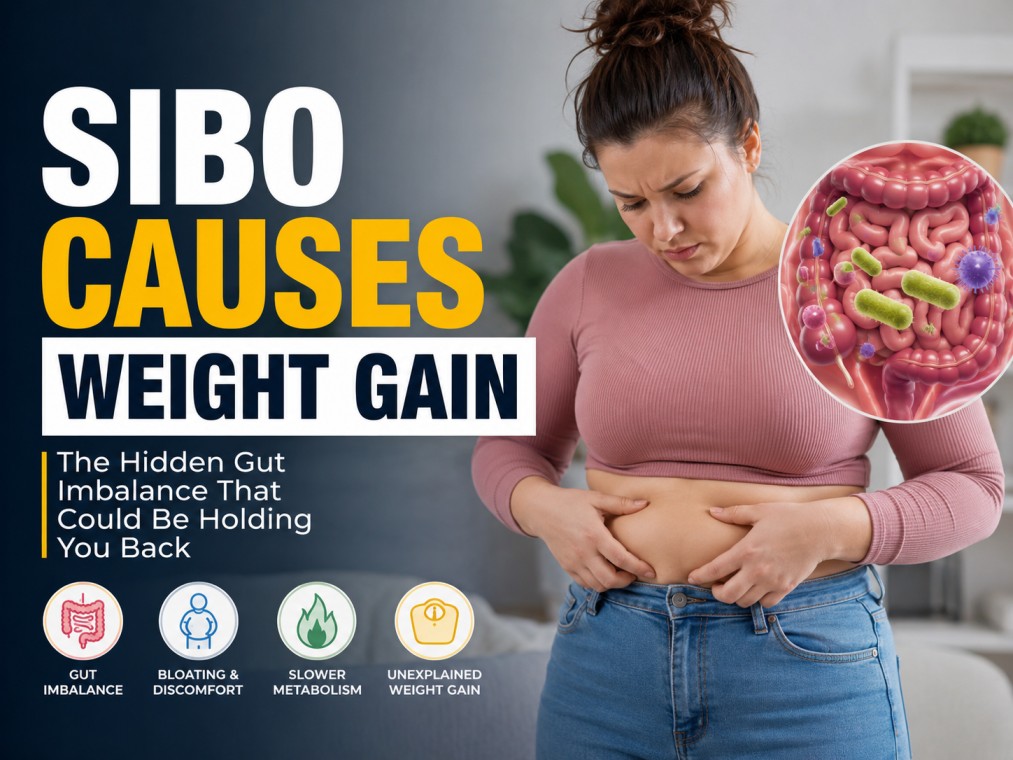
Many people associate digestive disorders with weight loss, but that assumption is incomplete. In some cases, Small Intestinal Bacterial Overgrowth (SIBO) may contribute to unexplained weight gain, bloating, and metabolic imbalance. Individuals often struggle with stubborn weight changes despite dieting, exercising, or maintaining an active lifestyle. This is where gut health becomes an important part of the conversation.
What Is SIBO?
Small Intestinal Bacterial Overgrowth occurs when excessive bacteria grow inside the small intestine. Normally, the small intestine contains fewer bacteria than the large intestine. When bacterial levels increase abnormally, digestion and nutrient absorption can become disrupted.
Common symptoms include:
- Persistent bloating
- Gas and abdominal discomfort
- Constipation or diarrhea
- Fatigue
- Food sensitivities
- Unexpected weight fluctuations
Although many people lose weight with digestive issues, others notice gradual or sudden weight gain that seems difficult to explain.
The Link Between SIBO and Weight Gain
The relationship between SIBO and weight gain is more complex than most online discussions suggest. SIBO does not directly “cause fat gain” in the same way overeating does. Instead, it may indirectly affect body weight through inflammation, hormones, cravings, and digestion problems.
1. Chronic Inflammation Can Affect Metabolism
Bacterial overgrowth may trigger ongoing low-grade inflammation inside the digestive tract. Inflammation can interfere with insulin sensitivity and metabolic efficiency, making it harder for the body to regulate weight properly.
When inflammation increases:
- The body may retain more water
- Fat storage hormones may become imbalanced
- Energy production may decline
This can create conditions that encourage gradual weight gain over time.
Read More Blogs- common digestive problems and home remedies
2. SIBO May Increase Sugar and Carb Cravings
Certain gut bacteria feed on carbohydrates and sugars. Some researchers believe bacterial imbalance may influence hunger signals and cravings. People with SIBO often report intense cravings for:
- Bread
- Sugar
- Processed carbohydrates
- High-calorie comfort foods
This does not mean bacteria completely control eating behavior, but gut imbalances can influence appetite regulation and digestive comfort.
3. Bloating Is Sometimes Mistaken for Fat Gain
One overlooked issue is severe bloating. Many individuals with SIBO experience abdominal swelling that resembles rapid weight gain. Clothes may feel tighter, and the stomach may appear enlarged by the evening.
This is not always true fat accumulation. Gas production and fluid retention can temporarily increase waist size significantly.
4. Hormonal Disruption and Stress Response
Digestive disorders can increase physical stress on the body. Poor gut health may influence:
- Cortisol levels
- Sleep quality
- Energy balance
- Blood sugar regulation
Elevated cortisol and poor sleep are both associated with easier fat storage and increased appetite.
5. Reduced Physical Activity Due to Fatigue
SIBO-related fatigue can lower daily movement and exercise performance. Many people become less active because they constantly feel:
- Tired
- Uncomfortable after meals
- Mentally foggy
- Physically drained
Lower activity combined with metabolic stress may contribute to gradual weight gain.
Signs Your Weight Gain Could Be Related to SIBO
Weight gain alone does not confirm SIBO. However, digestive symptoms alongside unexplained weight changes may deserve attention.
Possible warning signs include:
- Bloating after meals
- Chronic constipation
- Frequent burping or gas
- Food intolerances
- Weight gain despite healthy habits
- Fatigue after eating
A medical evaluation is important because similar symptoms may also occur with thyroid disorders, hormonal imbalances, or insulin resistance.
How Is SIBO Diagnosed?
Doctors commonly use breath testing to detect abnormal bacterial fermentation inside the small intestine. In some cases, additional testing may be needed to rule out:
- IBS
- Celiac disease
- Food intolerances
- Metabolic disorders
Self-diagnosing based on internet symptoms alone is risky because digestive conditions often overlap.
Managing SIBO and Supporting Healthy Weight
Successful management usually focuses on addressing the underlying gut imbalance rather than chasing rapid weight loss.
Common approaches may include:
- Dietary adjustments
- Reducing trigger foods
- Targeted medical treatment
- Stress management
- Improving sleep quality
- Supporting healthy digestion
Some people improve with low-FODMAP strategies, but restrictive diets are not always a permanent solution.
Final Thoughts
SIBO may contribute to unexplained weight gain through inflammation, bloating, hormonal disruption, cravings, and reduced energy levels. However, the connection is indirect and varies between individuals. Many online articles oversimplify the issue by claiming SIBO automatically causes obesity or rapid fat gain, which is not strongly supported by current evidence.
Persistent digestive symptoms combined with unusual weight changes should be evaluated professionally. Treating gut health problems early may improve both digestive comfort and long-term metabolic health.